Chapter Six
Understanding the Perpetrators: Typology of School Shooters
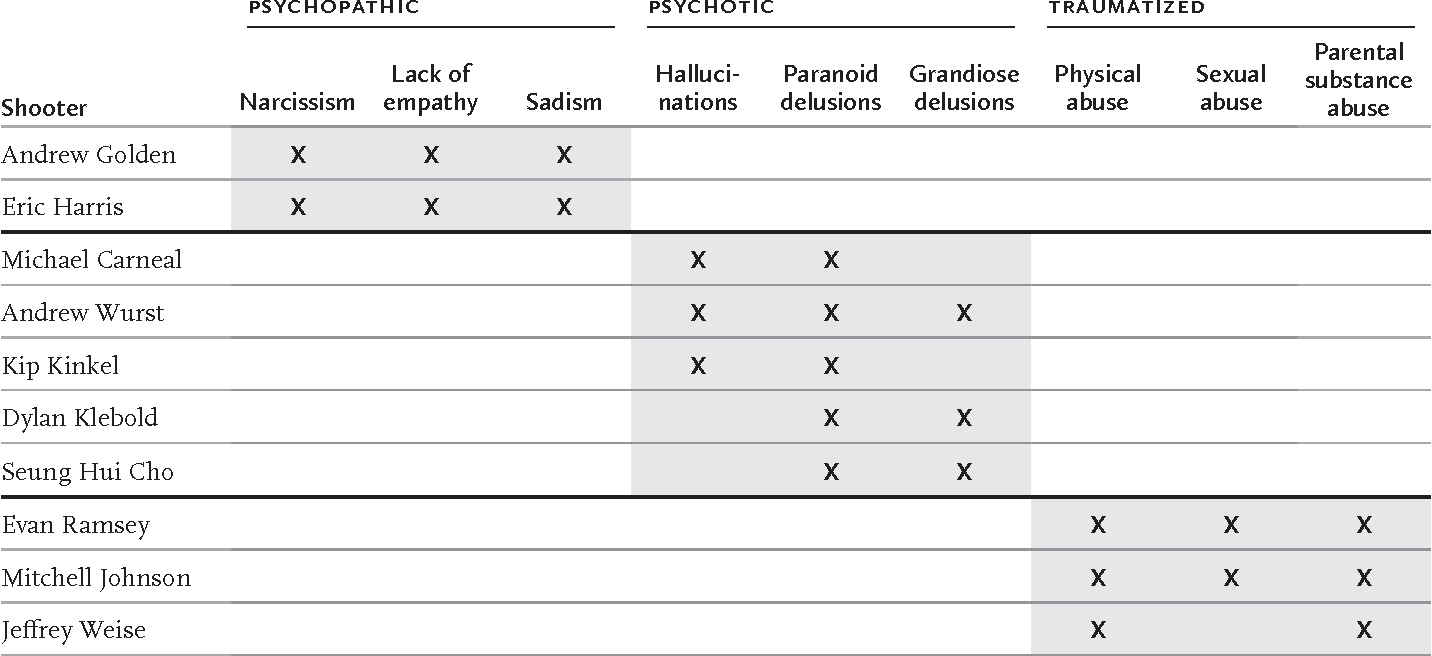
A major takeaway from this research is that searching for a single “type” of school shooter is not only inaccurate but can also be harmful. Experts like Peter Langman argue that relying on a fixed profile can lead to missed warning signs when individuals don’t fit expected patterns. Instead, Langman proposes a typological framework that focuses on underlying psychological pathways rather than surface-level traits. This approach recognizes that perpetrators come from diverse backgrounds and are shaped by multiple interacting factors, making their paths to violence complex and varied.
Langman identifies three main categories—psychopathic, psychotic, and traumatized—each representing a different pathway to violence. These categories highlight how motivations can range from a desire for power, to a break from reality, to the impact of prolonged trauma. Importantly, these types can overlap, reinforcing that no single explanation applies to every case. This framework is especially valuable for prevention, as it suggests that different individuals require different interventions, from mental health support to trauma-informed care. Overall, moving beyond a one-size-fits-all profile allows for a deeper understanding of risk factors and more effective, tailored approaches to preventing school violence.