Introduction
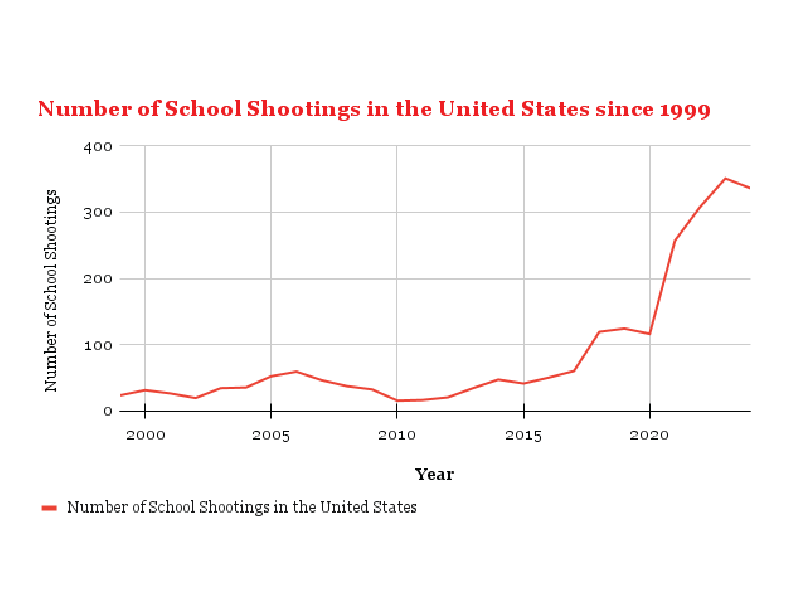
In the aftermath of every school shooting, the same question lingers: how did this happen? Public conversations often turn to familiar explanations—mental health, bullying, video games, or gun laws—but these only capture fragments of a much larger issue. None fully explain why schools, spaces meant for safety and learning, have repeatedly become sites of violence. Over the past 25 years, school shootings have evolved from isolated tragedies into a recurring national crisis, with sharp increases following the Columbine High School massacre and the Sandy Hook Elementary School shooting. Recent data shows these incidents have reached unprecedented levels, yet the deeper forces driving them remain only partially understood.
This project argues that school shootings reflect broader cultural and societal tensions, not just individual acts of violence. To better understand why schools are targeted, this e-book takes an interdisciplinary approach, drawing from psychology, sociology, media studies, and long-term data trends. Rather than relying on oversimplified explanations, it explores how personal motivations, cultural narratives, and structural conditions intersect. Ultimately, the goal is not only to track the rise of school shootings but to better understand what they reveal about American society and to identify gaps that can inform more effective prevention and future research.